Check out the new blog location: stefansreviews.com
Thank you for the support!
Stefan
Wednesday, July 18, 2018

Friday, July 13, 2018
A Lifetime in Film: 1988 Introduction
The year was 1988. The Cold War had warmed up considerably by then and the so-called 'party decade' was festively winding down stateside. The political and cultural influences on cinema were reflected in the themes, emotions and messages of late 80's cinema. Going through a list of releases from that period, it's almost like we couldn't stop celebrating, but still needed something to celebrate. And yet, despite this conflicting canvas, few people view the 80's as the best decade of cinema - usually it's overshadowed by the solemn dramatic classics of the 70's and the modern, heady blockbusters of the 90's.
 Despite all of this, 1988 shines brightly even 30 years on, and you don't have to look too hard to find some real gems. Take Kieslowski's A Short Film About Killing (clocking in at over 80 minutes, even still), a cold, calculated concoction that, some have gone as far as to say, may have actually changed the world. Credited in some circles with causing the Polish government to abolish the death penalty, Kieslowski's film is a harrowing taste of modernity at a time when we may not yet have been ready for such in-your-face, matter-of-fact depictions of society's violent tendencies.
John Waters' Hairspray on the other hand seemingly came out at exactly the right time, and perfectly bookended the most adventurous part of his career as a director. One of his 'tamer' films, Hairspray was not just flashy 60's nostalgia. Waters created a perfect anti-racism fable that, not only fit the times, but would unfortunately stay current for years to come (witness the 2007 remake).
 Waters was just one of many filmmakers with career highlights in the year 1988. Another was the Greek auteur Theo Angelopoulos. While he had been a veteran of historical melodrama up to that point, it wasn't until 1988's release of Landscape In The Mist, a film designed to stop you in your tracks and fully consider what's really important about the concept of the 'road movie' - it's not the journey or the destination, but the meaning of the whole endeavor that really matters. Landscape in the Mist was so shockingly innovative in fact, that many forget it was released in the 80's. It's impossible that a film this contemplative (and technically stupendous) could be released at such an 'innocent' time for cinema.
After all, it came out at around the same time as Ivan Reitman's high concept comedy Twins. For my money, Twins may be Reitman's most enjoyable comedy, if not his best film overall. Looking back on it now, one is amazed by how effortless the laughs are, how sharp the humor is, and how enjoyable the performers are to watch on screen. Reitman has made a career out of making endlessly rewatchable comedies and that is no easy feat. Twins is now looked down upon... Why? Part of the fun is that the jokes are easy, yet the actors still pull them off wonderfully on screen.
 Lastly, I want to bring up the perfect antidote to the comedic overtones of Twins - George Sluzier's chilling thriller The Vanishing. It's a film that fills the audience with an inescapable dread. A great example of the surprising power of Dutch cinema, The Vanishing is one of those films that will not sit right with the viewer after it's over. For some reason, this made-up story feels a lot more real than the sensationalized true-crime podcast-bait of today. In '88, before the internet made them easy to consume, these types of stories had an extraordinary haunting power over society.
And here is the best part, these films didn't make it to the Top 15 movies list that I'm going to chronicle as part of my attempt to sum up 1988 - the year that was in film. That's how good of an year it was - I'm actually proud it's my birth year! I can't wait to watch some 15 of the most important films that came out that year, starting with the Dan Aykroyd/John Candy classic (I hope) The Great Outdoors! See you then.

John Waters' Hairspray on the other hand seemingly came out at exactly the right time, and perfectly bookended the most adventurous part of his career as a director. One of his 'tamer' films, Hairspray was not just flashy 60's nostalgia. Waters created a perfect anti-racism fable that, not only fit the times, but would unfortunately stay current for years to come (witness the 2007 remake).
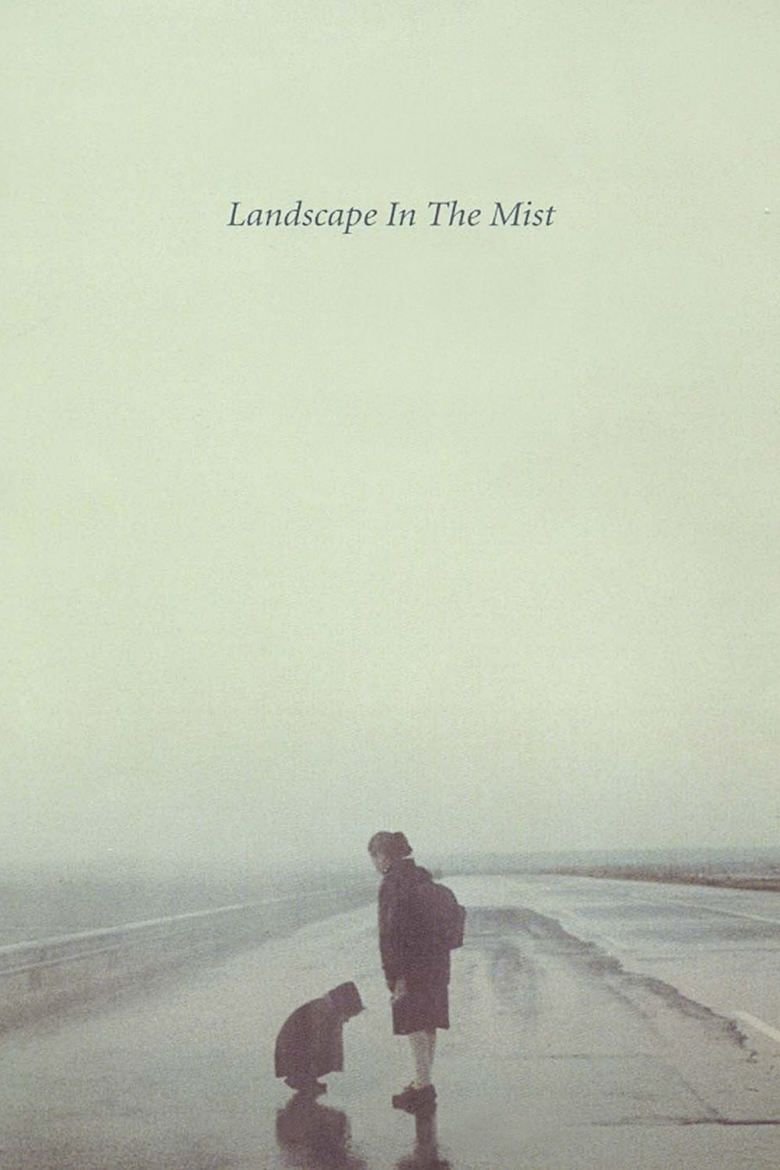 Waters was just one of many filmmakers with career highlights in the year 1988. Another was the Greek auteur Theo Angelopoulos. While he had been a veteran of historical melodrama up to that point, it wasn't until 1988's release of Landscape In The Mist, a film designed to stop you in your tracks and fully consider what's really important about the concept of the 'road movie' - it's not the journey or the destination, but the meaning of the whole endeavor that really matters. Landscape in the Mist was so shockingly innovative in fact, that many forget it was released in the 80's. It's impossible that a film this contemplative (and technically stupendous) could be released at such an 'innocent' time for cinema.
After all, it came out at around the same time as Ivan Reitman's high concept comedy Twins. For my money, Twins may be Reitman's most enjoyable comedy, if not his best film overall. Looking back on it now, one is amazed by how effortless the laughs are, how sharp the humor is, and how enjoyable the performers are to watch on screen. Reitman has made a career out of making endlessly rewatchable comedies and that is no easy feat. Twins is now looked down upon... Why? Part of the fun is that the jokes are easy, yet the actors still pull them off wonderfully on screen.

And here is the best part, these films didn't make it to the Top 15 movies list that I'm going to chronicle as part of my attempt to sum up 1988 - the year that was in film. That's how good of an year it was - I'm actually proud it's my birth year! I can't wait to watch some 15 of the most important films that came out that year, starting with the Dan Aykroyd/John Candy classic (I hope) The Great Outdoors! See you then.
Wednesday, July 11, 2018
New Series: A Lifetime in Film

Having just turned 30, and wallowed in my own chaotic insecure delusions about it for a few days, I've decided that the best way to embark on this next part of my life is to go back to doing things that fulfill me as a human being. One of them is regular exercise (especially running) and the other is watching and yes, writing about, film. The archives of this blog show my love/hate relationship with movies (I love the good ones and could care less about the bad ones), and I hope to add on to them by starting a new blog series: A Lifetime in Film.
I have decided to look back over my life so far through the unforgivably honest frame of cinema. What was the over-arching theme in film of 1988 vs that of 2008? How has the art and science of filmmaking changed over my lifetime? What are some of the most notable performances and filmmaking careers of the last 30 years? I could probably answer these questions by doing some online research, but there's no better way to learn about cinema than watching movies. So I've decided to watch 15 notable movies from each year that I have been alive, starting with 1988 and ending with 2018.
OK, that's 450 movies that I have to watch and write about. Even now I'm unsure of the success of this series, but I'm 30! And there is something about that number that says "Do something with your life! However trivial, let it be something!" So I will.
So how did I get to the final list of 15 movies for each year? Well let's just say by using plenty of "Top" lists from such websites like Letterboxd, IMDB, BoxOfficeMojo, and RottenTomatoes. In fact, I have only come up with the list of 15 for 1988, and I won't bother creating the 1989 list until I'm done writing about the 1988 films.
What you can expect from this series, is about 17 posts for each year. The first will introduce the year, briefly touch on some movies that just missed making it to the list of 15, and preview the first film of the series. I will not spoil all 15 films in the beginning, so that hopefully you the reader can keep coming back for more. Then, I will have a post for each individual film that I plan on writing shortly after my initial viewing. The structure of these individual posts may vary, but they may mix in a short review, some background on the film/filmmakers and a look back on the film's legacy. Lastly, I will wrap up each year, by picking my most and least favorite films, and gathering my thoughts on what the year's films contributed to the history and future of the cinematic art form.
Thank you again for reading my blog! I look forward to going on this journey of a lifetime with you. I'm sure there will be highs and lows that only cinema can provide.
Tuesday, August 06, 2013
TC Tribute #16: The Firm: B-
 A Film Review By Stefan Vlahov
It doesn't take a long time to realize that Tom Cruise's 1993 John Grisham-adapted starrer The Firm gave the actor an opportunity to do something he hadn't so far in his illustrious (Rain Man, Born on the Fourth of July) career - totally slum it. In fact this is as close as Tom Cruise ever got to being the 'bland, one-note' screen presence that his most ardent critics were already accusing him of. And yet The Firm remains a curious, if not unique choice for him to headline at a time when scripts were surely stacking up at his agent's office with no end in sight. Part thriller, part critique of the corrupt justice system, Sydney Pollack's (Havana) film strays very little from Grisham's original text, albeit trimming it so as to fit within a two and a half hour running time.
Sight unseen, there are some warning signs that this film may as well be a disaster, not the least of which is that extraordinarily lengthy running time. Yet Pollack's casting of the film wins us over with bit parts from the likes of Ed Harris, Gary Busey and the extraordinary Holly Hunter who inexplicably ended up being nominated for an Oscar for 6 minutes of screen time! And while 'spot your favorite character actor' is fun to play for a while, we need an interesting story to get into. Grisham's tendency to write mainstream consumerist mysteries is warning sign number two, and yet the adaptation by David Rabe (Casualties of War), Robert Towne (Days of Thunder), and David Rayfiel (also (Havana), plays with time in a way that, while cliched by today's standards, keeps the mind at attention. It's a guessing game all the way to the end, even as the film's villains are slowly revealed and the consequences of their ruthlessness are in full tragic display.
The acting is certainly up to par for this type of film. Cruise has always been a fan of surrounding himself with talent and he once again succeeds at doing that without being overshadowed. Jeanne Tripplehorn is equal parts beautiful and complicated, Gene Hackman is having a great time playing a role he can do in his sleep, and Hal Holbrook's performance lends the film an air of credibility rarely seen in a Grisham adaptations. I won't mention any more of the performances because the varied famous people in bit parts serve to alleviate the running length of this film.
Which inevitably brings me to the editing work done by father-son team Fredric and William Steinkamp. The Steinkamps' work has always been problematic. Their editing is the opposite of dynamic and frequently their films are longer than need be. The Firm is no exception. No other technical aspect deserves mention, except for the Oscar-nominated score by Dave Grusin which sounds terrible in the film. Grusin has always written scores for albums rather than films, and his ill-fitting work on The Firm is the most egregious example of this tendency.
Still, there is a lot to recommend here. A strong script and great acting by many screen favorites is usually enough to put any film on my good side, but add a strong dose of "Cruise control" and you have a pretty good film for a Sunday afternoon. Just make sure you set aside enough time to watch it all the way through to the end
.
Wednesday, May 15, 2013
TC Tribute #15: A Few Good Men B+
 A Film Review By Stefan Vlahov
It's difficult to look back on A Few Good Men with anything but fondness. In a way, it's not just a film - it's a representation of a now bygone era. It's the type of film your dad says "they don't make anymore." What director Rob Reiner's film reminds me most of is a time when movies were not afraid of being preposterous and didn't always fall back on the safety net of subtlety, as most 21st century dramas do. I miss that time and I truly miss the era that brought us A Few Good Men.
Rob Reiner has never called attention to himself as a filmmaker and while that puts focus on the characters, it makes A Few Good Men oddly forgettable, especially for visually inclined viewers. Fortunately, the film is endlessly re-watchable a testament to the excellent performances by it's three leads (Tom Cruise, Demi Moore and Jack Nicholson) and a very strong supporting cast that includes the likes of Kiefer Sutherland and Kevin Bacon. Also its story line is one that actually is fairly universal - name a decade that isn't filled with 'potential war crimes' headlines and news stories. The film's universality in appeal from a political and entertainment standpoint is a testament to the way it uses cliche to it's advantage.
Most people will be entertained by A Few Good Men. Some may hold it up as an example of unspoiled filmmaking - a nostalgic piece of Americana to be revisited regularly in the decades to come. I don't have an issue with either viewpoint, and as the credits rolled I realized that I'd been the witness of something truly rare - a film that doesn't strive for greatness, but despite the lack of effort, immeasurably achieves it.
Thursday, February 21, 2013
TC Tribute #14: Far and Away B+
A Film Review By Stefan Vlahov

An idealistic blockbuster about the Irish immigrant struggle in late 19th century America, director Ron Howard's Far and Away has received an unfairly bad rap over the last decade. Long thought of as an overblown melodramatic epic, the film actually hides a fairly subtle message about class structure beneath all the scenic shots of the American countryside. For it was the coming of the immigrants in the late 19th century that turned the US into a (less pronounced) "caste system", with the so-called 'aliens' dueling deep in the dark underbellies of the big cities.
Of course it would be simply untrue to call Far and Away a 'study' of those tumultuous times. Instead, Howard uses the tumult to provide the two main roles with plenty of character-building adventures and culture clashes. A good example is the film's prologue which portrays three rowdy but hardworking Irish brothers plowing their farm's land just before it is taken over by the Irish aristocracy in a tragic turn of events. This scene and the subsequent events that occur to main characters Joseph Donnelly (Tom Cruise) and Shannon Christie (Nicole Kidman) serve as a list of reasons why people immigrated to the US. The US wasn't simply the the Great White Light of the West, and in fact most Irish immigrants would have preferred not to have moved, but so often in these stories, people are running away from something, not going to anything.
Howard's film is anything but tightly constructed, as screenwriter Bob Dolman (Willow) leaves no stone unturned with his highly detailed script. Still, Howard never loses focus of the characters and either one of them is within the frame in almost every scene of the film. We find ourselves learning about the Irish culture through their experiences and confrontations, not through needless narration or exposition. Their love for one another is constantly challenged by the external nightmare they've been thrust into. Kidman's Christie is especially pitiful since she would have led a much more materialistically rewarding life had she stayed with her wealthy aristocratic family in Ireland. We are often made aware of that fact, most strongly when her wealthy family eventually shows up stateside in an attempt to take her back to Ireland.
Far and Away is many things, from a romantic drama to a survivalist tale and the fact that it works successfully within the various genres is not only a credit to Howard, but to the main performances as well. Cruise's Irish accent is certainly something to get past, but it isn't badly realized - we just aren't used to hearing him with the accent. The fact that he doesn't look Irish only exasperates the problem. Still, it is one of the more emotional performances of Cruise's career which is saying a lot, and it's nice to see his character have a true arch that we rarely get in big blockbuster movies. Kidman is less memorable as the spoiled rich girl who decides to throw it all away for love. As great an actress as she turned into later in her career (Eyes Wide Shut, Birth, many others) it's interesting to see her still mainly relying on her looks and charm in her early career. It's a smart move on her part, but the characterization suffers from it.
Overall, I can't help but recommend Far and Away. It's an astonishingly beautiful (shot in 65mm format), but gritty enough portrayal of the immigrant land rush inspired by the Manifest Destiny doctrine adapted in the 19th Century. This historical time period is strangely absent from current cinema, and the film refreshingly puts it front and center. Even if the players involved don't look back on the film as fondly as one would think, it's negative reputation is clearly overblown. It is indeed the perfect lazy Saturday afternoon movie
Tuesday, October 02, 2012
TC Tribute #13: Days of Thunder (1990) C
 A Film Review By Stefan Vlahov
By the late 80's/early 90's Tom Cruise had built up enough pedigree with an Oscar Nomination (Born on the Fourth of July) and consistent box office successes that he could do anything he wanted. He chose Days of Thunder which certainly fits the bill of a star vanity project. Cruise co-wrote the story with old pal Robert Towne (who turned it into a screenplay) and had another industry friend Tony Scott direct it. Unfortunately, the result was underwhelming - a badly paced, unattractive and emotionally inert NASCAR film with little to differentiate it from other films of its ilk (like the equally pedestrian Driven, released 10 years later).
The premise is pretty simple. Tom Cruise plays Cole Trickle - the new kid on the racing scene looking to outshine veteran Rowdy Burns (Michael Rooker) with the help of old time crew chief Harry Hogge (Robert Duvall). As the story goes on, he meets Dr. Lewicki (Nicole Kidman) who not only heals his wounds resulting from numerous car crashes, but also helps him reveal the softer side hidden under his bad boy exterior. Will Trickle finally be able to defeat Burns while also pairing up with the stunning Lewicki? Or are there more important things in life than winning a NASCAR race?
To call the film cliche-ridden would almost be underselling it: the whole thing is one big cliche. But that doesn't matter - so was Top Gun, and yet in that film director Scott and Cruise were able to make a compelling, human (relatable if not realistic) film filled to the brim with entertainment. Thunder tries to do the same but fails at almost every turn. When a tragic event occurs in Thunder it's emotional weight is undermined by a lack effort on both the director's and performers' parts to make it palpable. Of course, leave it to me to bad-mouth the late Tony Scott, but it just seems that he was as uninterested in making this film as Towne was in writing a good script. There isn't any excitement in the racing scenes and the results pack little punch and are of little consequence.
But Scott was a good actors' director and he shows it again here. Cruise is on total cruise control, relying more on his looks here, than in anything he'd starred in since Top Gun. Kidman tries harder as the race car drivers' in-house doctor. In fact the conflict she has with Cruise, while predictable, is more effective than the one driving the main story arch and she deserves most of the credit for its effectiveness. Duvall is merely serviceable, but when he tries to chew the scenery, you can almost sense how he single-handedly elevates the whole film to a new level. My favorite performance though was by Michael Rooker as Cruise's arch-enemy. His character represents the screenplay's strongest point as it turns the audience's perception of him and Cruise's character on its head. Rooker is able to snarl with the best of them, but when he needs to show vulnerability he has an ability to make us care like no one else in the film.
While there are a few bright spots in Days of Thunder, it's only required viewing for Cruise or Scott completists. Everyone else can simply go back to Top Gun and avoid, what is in my opinion Cruise's worst film thus far in his career.
Sunday, August 19, 2012
Movie Review: Assault on Precinct 13 (2005) B
 A Film Review By Stefan Vlahov
It's a scenario that's practically meant for high melodrama: a group of police officers and criminals stuck in a claustrophobic police building have to defend themselves from a mysterious outside force that contains a lot more firepower than they do. Back in the 70s, the original Assault on Precinct 13 caused quite the hubbub as it was written and directed by genre newcomer John Carpenter going through the "B-Movie" motions while also inserting different thematic ideas - from racism to Vietnam-level war allegories stemming from the unknown enemy's relentless attacks even in the face of countless casualties. Carpenter wasn't interested in the reason why the attackers wanted to kill everyone inside the abandoned precinct building, choosing to focus on the drama inside. The relationships between the criminals and their overseers, filled with much distrust and anxiety, both weakened and strengthened their resolve in attempting to survive this massacre.
Most of those themes are intact in Jean-Fracois Richet's 2005 remake. Working off James DeMonaco's adaptation of the original work, Richet keeps the set up of the story largely the same, adds a bit of slick Euro flavoring to the visuals (courtesy of cinematographer Robert Gantz) and casts a few recognizable faces namely Ethan Hawke, Laurence Fishburne and Maria Bello. The film opens with a great monologue-type scene by Hawke as an undercover cop acting like a druggie. It's actually a great acting moment and automatically entrances the audience. It's another reminder of how good an actor Hawke is and he becomes the film's biggest asset.
The one misstep of the film is the screenplay's insistence to put a face, name and purpose to the villains. Led by a scenery-chewing Gabriel Byrne, they are revealed to be police officers themselves. While this provides a welcome statement about corruption and politics that the nation's crime-fighters are frequently plagued by, I still prefer Carpenter's approach. In Carpenter's film we know as much about the enemy as the people trapped in the building do and the new film sacrifices that to send a message.
Still, it's the characters that matter and they are what keeps us entertained. In that regard, the remake is a winner. In addition to the aforementioned Hawke, there's Fishburne doing the best "mysterious and all-knowing" act that he's known for. Bello is a much stronger female character then any in the original, and we even get some much-needed humor from John Leguizamo and Ja Rule as two of the criminals.
Overall I do recommend this new version of Assault on Precinct 13 due to the strong performances and the suspense factor. While Carpenter's film retains its originality and heightened sense of dread and fear of the unknown, this new version offers enough thrills to satisfy most any film-goer. This can be a great watch with a big group of people.
Wednesday, May 09, 2012
Weezer Series #1: "Weezer"
 A Music Review By Stefan Vlahov
Back in the mid-90s listening to indie grunge band Weezer was a fairly uncool thing to be caught doing, but many people did it anyway, in the privacy of their own home so as not to be seen as fad-chasers by a malignantly critical music scene that looked down on anything attempting to stray from the Nirvana formula even a little bit. Weezer's self-titled debut was seen as a poor take-off on the bass-heavy rock n' roll that had been put on life support just a few years earlier. Little did people know, this alt-rock band led by singer/songwriter Rivers Cuomo had plans to move music forward, not regress into tried-and-true grunge-rock. Lead single "Buddy Holly" with it's tongue-in-cheek lyrics and unique unstructured chorus showed as much. "What's with these homies dissing my girl? Why do they gotta front?" infamously sings Cuomo in the romantic song that mixes ultra-violent imagery with a joking attitude that soon becomes infectious. While that juxtaposition of sex (love) and violence has become a Weezer (and Weezer copycats) staple 18 years later, it was a realtively unique idea for light rock at the time.
"Buddy Holly" and its subsequent silly (in a good way) music video didn't make many people take Weezer seriously, but then came the brooding "Undone (The Sweater Song)", a comparatively slow roller that was obvious in its lyrics, but remained vague in its overall meaning. At some point it appears to be about a relationship that can never be, at another a break-up song, but at the very beginning it sounds like its about the reluctance to join the same old stupid party that you always end up at on a Saturday night. The multitude of possible messages makes the song a must-repeat listen, not to mention its forward-looking musicality that would inspire Weezer copycats like Fountains of Wayne.
But one must get past those two singles to get to the real meat of the album. The unapologetic "My Name is Jonas" is a hard-hitting rock piece about the way life can surprise at every turn. "The World Has Turned and Left Me Here" is a pure break-up song made unique by Cuomo's heartbreaking lyrics: "I talked for hours to your wallet photograph And you just listened". "In The Garage" finds the band going into the future with their first true self-deprecating song - a theme they would make whole albums out of within the next decade. And finally "Surf Wax America" is the most musically accomplished cut on the album complete with carefree lyrics and an indulgent mid-song musical breakdown. This is classic Weezer.
Overall, the praise being heaped upon Weezer's debut is much-deserved. It's one of the few alt-rock albums that actually live beyond their gimmicky hit singles and packs more staying power in under 40 minutes than some albums have in almost twice the running length. It's in fact very difficult to pick a "worst song" on this album as about eight of them are tied at "great" and the other two are too creative in their execution to be called mediocre. The album will be enjoyed by music enthusiasts who don't want to go too obscure, and by mainstream music lovers looking for some catchy tunes to accompany their day.
Also make sure you search out the Deluxe Edition that includes rare songs not found anywhere else and live performances of album favorites like "My Name is Jonas" and "Surf Wax America".
Best Song: Surf Wax America
Worst Song: No One Else
Saturday, April 21, 2012
Music Review: Grand Rapids Symphony Preforms "The Return of the King"
 A Music Review By Stefan Vlahov
Almost nine years after the trilogy's final film was released theatrically, and five years after the final chapters of the films and soundtracks got the 'extended' treatment, The Lord of the Rings remains ingrained in the conscious of regular film-goers everywhere. But there is another group of people who've become equally acclimated with the trilogy - classical music lovers. The original score for the trilogy written by composer Howard Shore was as much a part of the movie as the actors and special effects, and it was infused in almost every frame of the trilogy's 10 hour (extended) running time. Instead of overwhelming movie-goers, it became a part of the experience. While Harry Potter fans were anticipating things like what Voldemort would look like, Rings nuts were thinking about how Shore would approach scoring the Battle for Helm's Deep, or what theme he would write for the character of Gollum.
While a soundtrack CD of the music as heard on the theatrical film releases was available for each film, rumors started coming out of the Shore camp that much more music was composed that didn't make the albums. Lo and behold, four long years later the so-called "Complete Recordings" were all available to own - each coming a year after the last. Meanwhile, Howard Shore had performed many live symphonic concerts all over the world - from Wellington, New Zealand to New York City. Of course Shore had a day job - composing scores for other movies, and what eventually happened was local symphonies took up the baton and began performing the score themselves.
I was lucky enough to attend one of these concerts just a few months ago (as of this writing). The performers were the Grand Rapids Symphony Orchestra and the venue was DeVos Performance Hall in downtown Grand Rapids. The film score they were performing was The Lord of the Rings: The Return of the King. It was an interesting set up - the theatrical version of the film played on a big screen behind a full symphony. The choir was behind and below the ceiling-mounted screen. The movie studio, in this case New Line Cinema, provides groups like the GR Symphony copies of the film with the score missing - it is the symphony's job then to perform the music live.

The Lord of the Rings: The Return of the King is largely seen as the most accomplished of the three film scores (no small feat), and GR Symphony more than does it justice. Not once during the concert did the symphony fall behind the film, which would have been a cardinal sin, or deliver a performance that didn't fit within Shore's original writing. I was amazed by how religiously Shore's notes were followed, from the low rumble in the beginning of "The Palantir" to the touching emotional highs of "A Far Green Country". The choir vocals are also worth noting, as some of the more powerful full-voice performances (as in "The Mouth of Sauron") packed quite a punch, and not a note was missed.
The solo vocals, featured in tracks like "The Eagles" and "For Frodo" were also excellent though this was the part where the live performance differed from the original recording the most. Still, these vocals didn't sound like mere covers - as "Days of the Ring" showed, one does not need to sound like Annie Lennox to get across the emotional contents of her lyrics. Another way in which the live performance differed from the one you'll probably listen to while viewing the films is that the chorus is a lot louder than the one remastered for the film's theater and Blu-Ray releases (subtitles were turned on for the performance). This was a nice 'bonus' for me as it allowed me to pay more attention to the texture of the vocal, if not the actual Elf language used in the songs.
Another highlight was that the orchestra kept going over the end credits, which constitute "Days of the Ring", and I was reminded of the many cast and crew that I need to be grateful for creating The Lord of the Rings and turning it into an once-in-a-lifetime gift that keeps on giving. I'm not sure if any other film score will have the staying power of this masterpiece. When so many composers are abandoning theme-based scores championed by such greats as John Williams and the late Jerry Goldsmith, Shore chose to go old school and filled his score with many memorable movements and fully established themes. It is never repetitive, never boring, and a few moments will have any listener overwhelmed with emotion. The live performance if you can catch it at a location near you, and the "Complete Recordings" CDs are both highly recommended!
Score: A+
Live Performance: A
Wednesday, April 18, 2012
TC Tribute #12: Born on the Fourth of July (1989)
 A Film Review By Stefan Vlahov
Director Oliver Stone has a knack for turning seemingly grandiose premises into small personal tales about individuals, instead of he major events surrounding them. Throughout his filmography he's tackled such major conflicting people and events as John F. Kennedy (JFK), Richard Nixon (Nixon), the Vietnam war (Platoon), Alexander the Great (Alexander), the Bush Jr. presidency (W.), and the events of 9/11 (World Trade Center), each time succeeding in humanizing the major figures involved. To an outsider, these people and events may be too imposing to grasp, but Stone finds it imperative that we not only become familiar with the people involved, but also find their greatest weaknesses. And so it goes with Born on the Fourth of July, a biographical film about real-life Vietnam War veteran Ron Kovic's experiences as a paralyzed ex-soldier living in a country that doesn't seem to be as grateful for his service, as he was in giving it. To make sure that the story was as accurate (and unrestrained) as possible, Stone co-wrote the script with Kovic himself.
Kovic is played by Tom Cruise and outside of the opening credits sequence which emphasizes cinematographer Robert Richardson's tremendous talent behind the camera, Stone leaves out most of his tendencies for directorial flourishes, and lets Cruise become the film. That is quite literally what occurs as Cruise is on screen for 99% of the screen time in a very challenging role, both physically and emotionally. At the beginning of the film after he gets injured in the field, Cruise is put through the grinder in an army infirmary where his paralysis prevents him from being able to perform basic life functions without assistance - unfortunately assistance isn't always present. While those scenes are some of the most demanding due to the physical effects on the character, a later scene involving a confrontation with also-paralyzed veteran Charlie (Willem Dafoe) will certainly get an emotional response, as we see two people who's lives have been thoroughly destroyed by a badly carried-out war and a country that's turned it's back on them.
It's no spoiler to admit that Kovic's story is largely anti-war and anti-patriotism (despite the film's title). But in addition to its politics, it displays a profound moral standpoint regarding the US's mistreatment of veterans - especially ones that are too injured to be able to get a job. Few rays of light break through the bleakness of Kovic's post-war life and they are usually short-lived. The harsh truth is that in a largely individualistic society like the US's, even those who most deserve our help get turned away, or worse become outcasts. It is then the movie's unflinching pro-soldier view that really helps it drive it's point across, it being that war is usually always senseless, and even the most patriotic believers may fall victim to it's terrible influence on greater society. If you want some light Sunday afternoon viewing, I can't recommend this film, but if you're ready to explore material that challenges general perceptions of what the soldier experience is like, it is not optional. A-
Wednesday, April 11, 2012
Music Review: What "My Beautiful Dark Twisted Fantasy" Should Have Been
 A Music Review By Stefan Vlahov
In the months leading up to the release of Kanye West's Magnum Opus My Beautiful Dark Twisted Fantasy, the controversial rapper decided to release free rough cuts of tracks that may or may not make it on the album each Friday through his Twitter account and blog. By the end, West had released a total of 15 free tracks (three of which made it on the official release of the album) that frequently featured many other rappers that were part of his G.O.O.D. Music label. The fact that most of the songs were actually amazingly good and well-produced examples of the rap/hip-hop genre, made the actual release of Fantasy all the more exciting for Kanye's Twitter followers.

When that fateful day finally arrived, the album was met with much fanfare from critics (with Pitchfork giving it a once-in-a decade 5 out of 5 stars) and music fans alike, but everyone that had kept up with the GOOD Fridays releases (as Kanye officially christianed them) was sorely disappointed by the barebones Fantasy. It included five songs that we'd already heard, through GOOD Fridays or as singles, and some (including myself) went as far as saying that most of the free songs ended up better than what eventually made it on the album. What I think Kanye should have done is to figure out a different way to hype the album and include all of the free music on the final album - making it a giant two-disk set of epicness. Fortunately since I own all of the GOOD Fridays releases and Fantasy, I have been able to do this myself by creating an epic playlist that contains songs from both, split into two parts (disks). Let's compare the official My Beautiful Dark Twisted Fantasy and the one that I created:
My Beautiful Dark Twisted Fantasy (Official):
1. Dark Fantasy
2. Gorgeous
3. Power
4. All of the Lights (Interlude)
5. All of the Lights
6. Monster
7. So Appalled
8. Devil in A New Dress
9. Runaway
10. Hell of a Life
11. Blame Game
12. Lost in the World
13. Who Will Survive in America?
14. See Me Now
My Beautiful Dark Twisted Fantasy (With GOOD Fridays Additions):
Disk 1:
1. Dark Fantasy
2. Don't Look Down (GOOD Fridays)
3. See Me Now
4. Power
5. All of the Lights (Interlude)
6. All of the Lights
7. Monster
8. Gorgeous
9. Chain Heavy (GOOD Fridays)
10. The Joy (GOOD Fridays)
11. Lost in the World
12. Who Will Survive in America?
Disk 2:
1. So Appalled
2. Christian Dior Denim Flow (GOOD Fridays)
3. Good Friday (GOOD Fridays)
4. Hell of a Life
5. Blame Game
6. Take One for the Team (GOOD Fridays)
7. Looking for Trouble (GOOD Fridays)
8. Devil in A New Dress
9. Runaway
10. Power (Remix) (GOOD Fridays)
That my friends is the best rap playlist in history. We ditch the rough transition from high-flying album opener "Dark Fantasy" into the low-beat strictly-rap ditty "Gorgeous" for a much smoother transition into the chorus-heavy heart breaker "Don't Look Down." After this we string up three of the album's hit singles, before going into hardcore rap territory with "Monster", "Gorgeous", and "Chain Heavy". We end disk one with the uplifting duo that ends the official release and therefore brings this part of the playlist it full circle. On this disk especially, one can see the shadow of the official Fantasy in the background, with the GOOD Fridays releases cutting like a razor through the material.
Moving on to disk 2, is it just me or is "So Appalled" the best album kick-off song this side of "Dark Fantasy"? It's aggressive verses and pounding beats provide more than just a preview of what's to come, and most importantly here it's not competing with the similarly structured "Monster" like it is on the official release. It is then followed by two of the more creative chorus-driven GOOD Fridays releases, before going into hardcore rap in the middle section with the bragging "Hell of A Life" all the way to the underrated "Looking For Trouble". The album ends with the two 'epics' from the official release - "Devil in a New Dress" and "Runaway" - a one two punch that should leave any person who appreciates music breathless for at least a few seconds. Also the Power (Remix) has 'extra bonus track' written all over it. Why didn't it act as that on the official Fantasy?
Overall, I would say that the My Beautiful Dark Twisted Fantasy release was botched by Kanye not really wanting to make it epic, instead choosing to include only the single-ready material (and "Gorgeous" for some reason). If he had instead released my proposed album above, he may have been hailed for creating THE best rap album of all-time. As it stands, Fantasy is a good attempt, squandered only by the way the powers that be decided to package it.
Official Album Rating: B+
Unofficial Playlist Rating: A+++ (seriously the best thing ever)
Tuesday, April 10, 2012
Book Review: "The Book of Daniel" by E.L. Doctorow
 A Book Review By Stefan Vlahov
If there is anything that E.L. Doctorow can be faulted for is his unrelenting ambition. The Book of Daniel is only his second published work, but he does things with it that an author penning his 50th wouldn't, in his or her right mind, pursue. The novel is written as a rough draft for a graduate school dissertation by the book's protagonist Daniel Rosenberg - son of alleged Communist spies Julius and Ethel Rosenberg. In his largely autobiographical dissertation Daniel writes about the tumultuous ways in which his parents' wrongful imprisonment has affected him and his family's lives.
This is a largely political, and disturbing work that deals with the psychological damage that such a tragic event may have on someone. Daniel grows up to be cynical, sadistic, and selfish, but believes in his heart that it's his right to be so after what had happened, which also makes him a hypocrite. Doctorow's disturbing and detailed accounts of Daniel's sexual perversions are difficult to get past and make it hard for the reader to connect with him. But the book shines when, through Daniel, Doctorow describes the historical setting, the unfairness, and the psychological toll on everyone involved in prose so immeasurably strong, that some of it can bring one to tears.
It is a testament to Doctorow's bravery that he would write a book as difficult to readily consume as this, so early in his career. While the narrative perspective is singular (that of Daniel), the book skips back and forth in time, introducing characters that only later get their needed development. While it's difficult to really get lost, some passages of the book are either too symbolic or too abstract, and I was unable to see how they fit into the story. Still, if you're bored by traditional narrative and are looking for a book that has many hidden rewards for the reader, The Book of Daniel should certainly be on your list of must-reads. B+
Monday, April 09, 2012
Movie Review: The Aristocrats (2005) D
 A Film Review By Stefan Vlahov
A documentary whose sole existence is meant to repulse its unsuspecting viewer, Paul Provenza's 2005 all-star assault on the olfactory, The Aristocrats is an aimless, pointless talking heads mash-up filled with empty words and a lack of anything worthwhile, or funny. Sparked by comedian Gilbert Gottfried's attempt to break the ice with an audience rubbed the wrong way by a "too-soon" 9/11 joke, the film is really about how he was able to win the audience back - by telling a joke that's been told since time immemorial called "The Aristocrats." The difference here is that the joke is really an in-joke among comedians that has never been told in front of a live audience, for a couple of reasons - it's incredibly dirty and incredibly unfunny (a few of the 100 comedians interviewed for this say as much). Basically the joke contains a backstory (a hook), an improvised middle section, and a punchline. It's actually really easy to make one up of your own. Here is my attempt:
"A family walks into a talent agent's office and tells the agent they do the most amazing act that will definitely be a hit on Broadway. The agent asks them to perform the act so he can be the judge. The family bows down before the agent and begins to play out their act. They all have sex with each other - the mom, the dad, the kids, the family dog, etc. At the end of it, the talent agent is left aghast, but still asks what the name of the act is. The family announces that it's THE ARISTOCRATS!" (tee hee).
What we get in this film is about 15 or so different takes of what goes on in the middle of the joke. While my version is fairly tame (and probably close to the way it was originally told), the "they all have sex with each other" part is substituted by whatever the most disgustingly imaginable thing the comedian could improvise on the spot. People like the late George Carlin, Billy Connolly, Whoopi Goldberg, Gilbert Gottfried, and Bob Saget, just to name a few, offer their versions and they are some of the most disgusting, unpleasant, and unfunny things I've heard in a while. Incest and necrophilia are just the tip of the iceberg. And yet, that's what makes this joke legendary (reportedly) - it's the fact that the funny part is the middle section where we see how far each comedian is willing to push their deprivation.
As expected, the film gets quite boring fairly quickly and the only fun anyone might be able to get out of it is to try to spot their favorite funnyman. Other than that, it's simply too long and the film strays away from revealing the real reason this joke never became a mainstay in stand-up - it's simply bad. Look for this movie to garner a similar reputation.
Wednesday, April 04, 2012
Music Review: "Some Nights" by Fun.
 An Album Review By Stefan Vlahov
 Much like fashion, art is a cyclical phenomenon. Within a few short years we've had many great new bands attempting to recapture the glory days of genres and musicians from decades past. The Arcade Fire have put a new spin on the Bruce Springsteen template of heavy message-rock, Sigur Ros have elected to pursue the ethereal sounds of "Dark Side of the Moon" Pink Floyd, and now Fun. mixes modern pop and R&B sounds with distinctly Queen-like vocals and song structure. I must preface this by saying that I don't think that the tendency to recycle what's tried-and-true is a negative, in fact it can be a breath of fresh air compared to the "new" sound heard on your local Top 40 stations.
Fun. have been fortunate enough to get more radio play (and even a "Glee" cover) than the other bands mentioned above due to hit single "We Are Young (feat. Janelle Monae)" - an epic sing-along pop tune that, while infectious also holds a surprisingly dark lyrical tone. And therein lies what separates Fun. from all the bands they pay homage to - the dark, discomforting lyrics that wallow in grief, loss and controversy are accompanied by catchy, over-produced, piano-led music that serves as a pleasant reminder of 80s balladry and early 90s pop.
On the hard-hitting R&B/pop melange "One Foot" lead-singer Nate Ruess directly criticizes what he views as the blind beliefs of the overtly religious: "Happened to stumble upon a chapel last night, And I can't help but back up when I think of what happens inside" - one of a few lines that call out the church and religion in general. But in the very next stanza, Ruess proclaims his own belief that life can in fact go on forever through art - a physical creation, not a largely metaphysical one like an omniscient God. It's this contradictory and complex psychology that runs through most of the songs on the album and adds a surprising, though much welcome, degree of quality that is sorely missing in today's mainstream pop.
Musically, the band also stands on shaky ground, but manages to triumph. Produced by frequent Kanye West collaborator (most recently on "My Beautiful Dark Twisted Fantasy" and "Watch the Throne") Jeff Bhasker, the album contains the usage of musical tools that most traditional pop purists will decry, like auto-tune (and even "Runaway"-style vocoder on the epic "Stars"), vocal fading, synth, and sounds that can only be produced by machines. Still, Nate actually has a great singing voice, so these inclusions are mere stylistic flourishes that the band uses to spruce up the production. The most successful instance is on the album namesake "Some Nights" when the high-pitch setting allows Nate's voice to really take-off at the end of a solemn, but hopeful stanza about his nephew and the circumstances under which he was born, that leads into the full band singing the chorus line.
It is much less successful on album lowlight "It Gets Better" which Auto-Tunes the vocals throughout, but the song still comes off as dull. Auto-Tune sounds best when the song calls for many changes in pitch and tone (like in the aforementioned "Stars"), and it's usage on this song is largely misjudged. Still, most of the songs on the album are largely sans-Auto-Tune, including the lost love ballad "All Alright" and album closer "Out on the Town" which may be the two most traditional songs on the album.
Overall, this album has plenty of replay and sing-along value. It's varying tempos make it a good companion for anything from work-outs to road trips. It's music that will have you singing along while making you think (but not too much), and is a breath of fresh air on the pop scene. A-
Best Song: Some Nights
Worst Song: It Gets Better
Tuesday, April 03, 2012
Book Review: "Welcome to Hard Times" by E.L. Doctorow
A Book Review By Stefan Vlahov
 E.L. Doctorow's debut Welcome to Hard Times is a relatively minor work compared to his later efforts. The author, mostly known for historical fiction epics, turns in an old school tale in the Western genre that doesn't aim for the grandiosity of Larry McMutry or the psychological complexity of Cormac McCarthy, electing instead to keep it simple - a single setting with four main characters. The scene is Hard Times - a small town on the Western frontier that's bound to disappear as quickly as it appeared shortly after a nearby mine opens up. In the first chapter, heck within the first paragraph, Doctorow's unapologetic prose gives the reader a harsh welcome:
"The Man from Bodie drank down a half bottle of the Silver Sun's best; that cleared the dust from his throat and then when Florence, who was a redhead, moved along the bar to him, he turned and grinned down at her. I guess Florence had never seen a man so big. Before she could say a word, he reached out and stuck his hand in the collar of her dress and ripped it down to her waist so that her breasts bounded out bare under the yellow light."
Said man then unleashes a barrage of violence so relentless that the whole town is set on fire, more than half of it's population is killed-off and the other half decides to leave anyway, lest the bad man returns as quickly as he left post-destruction. This initial chapter speaks to the fragility of the American Dream back when "Manifest Destiny" was all the rage. Towns in places like the Dakotas (like this one) had an expiration date determined either by how long the local mine would hold up or how prone to crime the area was. From then on the book is about the effort by the town's defacto mayor Blue to rebuild it, with the help of two others who've decided to stay behind - a young boy, Jimmy and a prostitute, Molly.
And this is where Doctorow truly shines. Mostly, the book is about Blue's thoughts and his reactions to the many different characters who pass through town that he tries to recruit to stay. His relationships with Molly and Jimmy are also explored, so much so that those two characters are lent the complexity that most supporting players in Westerns don't usually get. What keeps the reader interested is that Blue is so easy to root for. He is a rational man who's gone down an irrational path - rebuilding the town and making it a permanent spot on the map is nigh impossible, and sooner or later, whether the bad man comes back or the mine gives out, the town will simply disappear. The character's display of naivete fed largely by the pursuit of the aforementioned American Dream lends him with an endearing quality that many can connect with.
Doctorow's crisp writing style makes this a quick read. He wallows in cliches while turning them on their heads in many parts of this book. He isn't afraid to indulge in long passages that go into Blue's thoughts and philosophical beliefs that turn from naive to almost cynical by the time the reader gets to the last few chapters. So in a way, Doctorow does infuse the book with McCarthyian complexity, but does it more subtly, and isn't afraid of infusing some traditional Western situations into the story. B
Sunday, April 01, 2012
Movie Review Archive (Alphabetical)
Here is an up-to-the-minute index of all the movies I've reviewed in alphabetical order (with film's year of release in parentheses):
4 Months, 3 Weeks, and 2 Days (2007)
10 Questions for the Dalai Lama (2006)
12 and Holding (2005)
16 Blocks (2006)
21 (2008)
27 Dresses (2008)
28 Weeks Later (2007)
The 40 Year-Old Virgin (2005)
88 Minutes (2007)
300 (2007)
1408 (2007)
10,000 B.C. (2008)
The Abandoned (2006)
Adam and Steve (2005)
Adam's Apples (2005)
The Adventures of Shark-Boy and Lava-Girl in 3D (2005)
Aeon Flux (2005)
Akeelah and the Bee (2006)
All the Right Moves (1983)
Alone in the Dark (2005)
Alpha Dog (2006)
Amazing Grace (2006)
America the Beautiful (2007)
American Dreamz (2006)
American Gun (2005)
An American Haunting (2005)
The Amityville Horror (2005)
Aqua Teen Hunger Force Colon Movie Film For Theaters (2007)
Aquamarine (2006)
Are We Done Yet? (2007)
Are We There Yet? (2005)
The Aristocrats (2005)
Art School Confidential (2006)
Arthur and the Invisibles (2006)
Ask the Dust (2006)
Assault on Precinct 13 (2005)
Automatons (2006)
Avenue Montaigne (2006)
Away From Her (2006)
Awesome! I Fuckin' Shot That! (2006)
Baby Mama (2008)
Backstage (2005)
The Band's Visit (2007)
The Bank Job (2008)
Be Kind Rewind (2008)
Because I Said So (2007)
Before the Rains (2007)
Behind the Mask: The Rise of Leslie Vernon (2006)
The Benchwarmers (2006)
Bhagam Bhag (2006)
Bigger Stronger Faster* (2008)
Black Sheep (2006)
Black Snake Moan (2006)
Body of War (2007)
Born on the Fourth of July (1989)
The Break-Up (2006)
Brick (2005)
Brick Lane (2007)
Carnage (2011)
Cars (2006)
Cocktail (1988)
Code Name: The Cleaner (2007)
The Color of Money (1986)
The DaVinci Code (2006)
Days of Thunder (1990)
Dead Silence (2007)
The Devil Inside (2012)
District B-13 (2004)
Down in the Valley (2005)
Eight Below (2006)
Endless Love (1981)
Fanaa (2006)
Far and Away (1992)
A Few Good Men (1992)
The Firm (1993)
Freedom Writers (2007)
Ghost Rider (2007)
Goal! The Dream Begins (2005)
Happily N'Ever After (2006)
Hoot (2006)
An Inconvenient Truth (2006)
Just My Luck (2006)
Keeping Up With the Steins (2006)
Lady Vengeance (2005)
Legend (1985)
Losin' It (1983)
The Lost City (2005)
Mission: Impossible III (2006)
The Omen (2006)
One Last Thing... (2005)
The Outsiders (1983)
Over the Hedge (2006)
Poseidon (2006)
A Prairie Home Companion (2006)
Premonition (2007)
The Promise (2005)
The Proposition (2005)
Rain Man (1989)
Risky Business (1983)
Saving Shiloh (2006)
See No Evil (2006)
Silent Hill (2006)
The Sisters (2005)
Stick It (2006)
Taps (1981)
Top Gun (1986)
An Unfinished Life (2005)
United 93 (2006)
X-Men: The Last Stand (2006)
Wednesday, March 14, 2012
Quick Review: Carnage C

Adapting plays for the big screen is a relatively rare tendency usually found with already accomplished filmmakers trying to go low-key by making a dialogue-based film. William Friedkin (of The Exorcist fame) did it in 2006 with Tracy Letts' Bug - a film that stuck to the original play's text almost religiously, creating a challenging to enjoy, but still admirable effort at conveying the mental breakdown of two desolate would-be lovers. Roman Polanski's Carnage based on playwright Yasmina Reza's "God of Carnage" is similar in that it involves only four (roughly) speaking parts for nearly 80 minutes, but unlike Mr. Friedkin's ballsy film, plays it safe, and fails to capture the original material's biting contents.
The screenplay written by Mr. Polanski and Ms. Reza (co-adapting her own work) seems a bit off from the get-go. After introducing the catalyst of the story over the beginning credits (a boy hits another boy with a stick at a playground), the film cuts to the New York apartment of the victim's parents, Penelope (Jodie Foster) and Michael (John C. Reilly) welcoming the parents of the aggressor Nancy (Kate Winslet) and Alan (Christoph Waltz) to their apartment for a discussion. The meeting is meant to clear the air surrounding the playground incident by having Nancy and Alan apologize for their son's behavior. Unfortunately, it turns into an argument as childish as the one the kids may have been in before the violent outburst.
It's an intriguing set up and the actors involved certainly have the skill to carry the film on their respective shoulders. But the lines they are asked to deliver (or yell out melodramatically) seriously let them down. As an audience we have 80 minutes to spend with these people - enough time to make this film compelling by revealing a theme worthy of an argument. Instead, the screenplay goes around in circles - first Ms. Foster is seen as being correct, then Ms.Winslet, and so on. The take-away I presume, is that the parents of these kids demonstrate that they are about as good at resolving their issues as their pre-teen kids are. I'd say that's a pretty weak point to get across, but it's seemingly the only one. Sure, Mr. Waltz has a big speech about the carnage that forms the basis of humanity, and Mr. Reilly (given the most subtle, and best character) reveals some issues with presumed marital bliss, but these two flitting glimpses of depth are quickly thrown away in favor of cheap, emotional catharsis, that undoubtedly fails.
From a technical point of view the film is also unimpressive. Polanski's mainstay cinematographer Pawel Edelman simply points the camera at the actors for a quick paycheck, leaving us with only a couple of artsy close-ups that reveal great details on the actors' emotive faces. It's amazing that the director/cinematographer team behind Oliver Twist, The Pianist and The Ghost Writer would make a film look as bland and outright boring as this. The editing and score (um, what score?) are not worth any mention as both editor Herve de Luze and composer Alexandre Desplat are pretty much not present, and are lucky to even be credited with the comparatively little work they actually did.
The actors of course fare better. The stand-outs are Ms. Winslet and Mr. Waltz - playing a rich, above everything and everyone married couple while also maintaining their credibility. There is an interesting chemistry between them when they are on the same side, or even when they argue, that is fairly fun to watch. Ms. Foster and Mr. Reilly are also trying their best with this material. Ms. Foster is usually a subtle actress, but I guess when you're forced to state the obvious throughout the whole film, you need to try extra hard to get any resonance, and boy does she! It's a performance that will leave many people with the impression that she is trying too hard. Which leaves Mr. Reilly - the only one who's actually fun (this is billed as a comedy) and who actually embodies his character whole. He plays a caricature, but due to his performance, it's a caricature we can relate to.
The film ends up being a total Polanski-as-a-control-freak bore, that's never truly clever or funny, and the themes it chooses to enlighten us with are so old-hat, you'd think it was written as a first draft of a much deeper work. In the end, while the actors try hard, it just seems anti-climactic and unfinished, never succeeding at getting it's point across.
Subscribe to:
Posts (Atom)